In 2007, a photograph album made by SS-Obersturmführer Karl Höcker, the administrative lead and right-hand man to Auschwitz commandant SS-Sturmbannführer Richard Baer, was made public. When the United States Holocaust Memorial Museum archives received this donation, instead of showing starving prisoners, gas chambers, and families ripped apart, the album revealed Nazi camp workers relaxing, holidaying, taking picnics, and eating blueberries as they smiled for the camera.
‘Who is left behind in boxes?’
Creator, director, and co-writer Moisés Kaufman first saw these images on the front page of The New York Times. As the son of a Holocaust survivor, he found these photos showed a side of the story he had never encountered. He joined forces with Tectonic Theatre Project (The Laramie Project, 33 Variations), and alongside co-writer Amanda Gronich, dramaturg Amy Marie Seidel, and producer Matt Joslyn, travelled to Poland. Together with a team of devisers and designers, Here There Are Blueberries was created.
The play tells the story of these photographs. Motivated by interviews with archivist Rebecca Erbelding, Tectonic’s documentary style creates a distinctive theatrical language. Inquiry is foundational, and space for testimony and documentation works alongside lived experience to shape the dialogue. Mostly spoken directly to the audience, the piece recounts societal context and archival discoveries made from the photos over the years.
The play tells the story of these photographs. Motivated by interviews with archivist Rebecca Erbelding, Tectonic’s documentary style creates a distinctive theatrical language. Inquiry is foundational…
Moments of emotional connection emerge through personal storytelling, particularly with Clifford Samuel as Tilman Taube, who recognises his grandfather among the images and seeks out other descendants in a conversation about identity, accountability, and generational guilt.
On the radio, screen, or stage?
The central question is whether this material works as theatre. Introduced with a single camera on stage and a shifting selection of images from the album, we are gradually joined by additional performers and a live accordion. The intention to engage the audience directly is clear, though at times the theatrical framing competes with the stark power of the photographs themselves. A more restrained opening may have allowed the images even greater impact.
It raises a broader question: Does this piece sit more naturally as a documentary film than live theatre? Further, struggling American accents pull the audience away from not only the Washington DC setting but a fully fluent production.
Exposingly beautiful
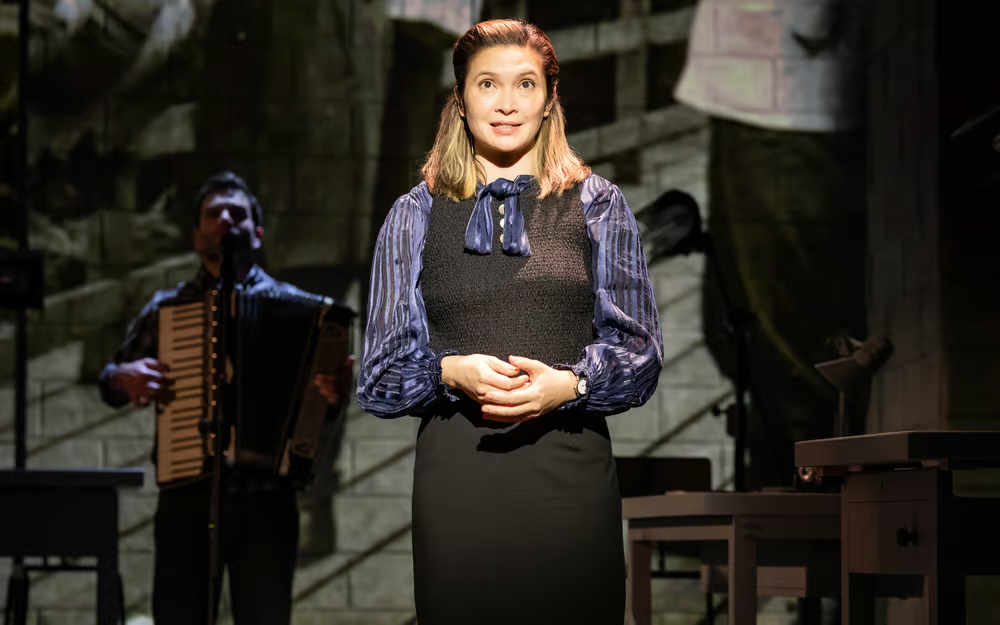
What stands out unequivocally is Derek McLane’s striking set design. The museum archivist’s space is meticulously detailed, filled with equipment, bare walls, and isolated desks. It feels not simply like a workplace, but a site of revelation and confrontation. A moving back wall exposes the photographs behind it, beautifully revealing, yet starkly brutal. Paired within the scene of Philippine Velge’s solo moment of confession, a palpable sense of unease is captured.

Sound designer Bobby McElver complements the action with subtle precision. The repetitive click of moving from photo to photo becomes a rhythmic undercurrent, broken only by purposeful silence. The effect is small but powerful, allowing space for reflection and shock.
It raises a broader question: does this piece sit more naturally as a documentary film than live theatre? Further, struggling American accents pull the audience away from not only the Washington DC setting but a fully fluent production.
Projection designer David Bengali’s work is central to the production’s success. The images are presented cleanly and meticulously, sometimes highlighted or layered across multiple surfaces. The photographs surround us—on screens, backdrops, and walls—guiding our attention through history and reinforcing the album’s unsettling presence.
‘What makes women Nazis?’
Intriguingly, the production also interrogates what makes ordinary people, including women, become complicit in atrocity. It challenges the assumption that such crimes were enacted only by visibly monstrous men, instead revealing how educated professionals—doctors, lawyers, clergy—facilitated and maintained the machinery of genocide. The camps, the play suggests, could not have functioned without individuals who appeared outwardly ordinary.
Here There Are Blueberries asks urgent questions. It reveals important images and brings to the stage a perspective on Holocaust history that many British contemporary audiences may not have encountered. While certain performance and structural choices occasionally dilute its impact, the production’s design elements—particularly its set and projections—provide a powerful framework for a story that remains both historically significant and deeply human.
Featured Image: Photo by Mark Senior – Philippine Velge (Rebecca Erbelding)
Details
Show: Here There Are Blueberries
Venue: Stratford East
Dates: 31 January – 28 February 2026
Running Time: Approximately 90 minutes (no interval)
Age Guidance: 12+
Admission: From £13
Time: 19:30, afternoon timings vary
Accessibility: Fully Accessible Venue


 By
By
 By
By